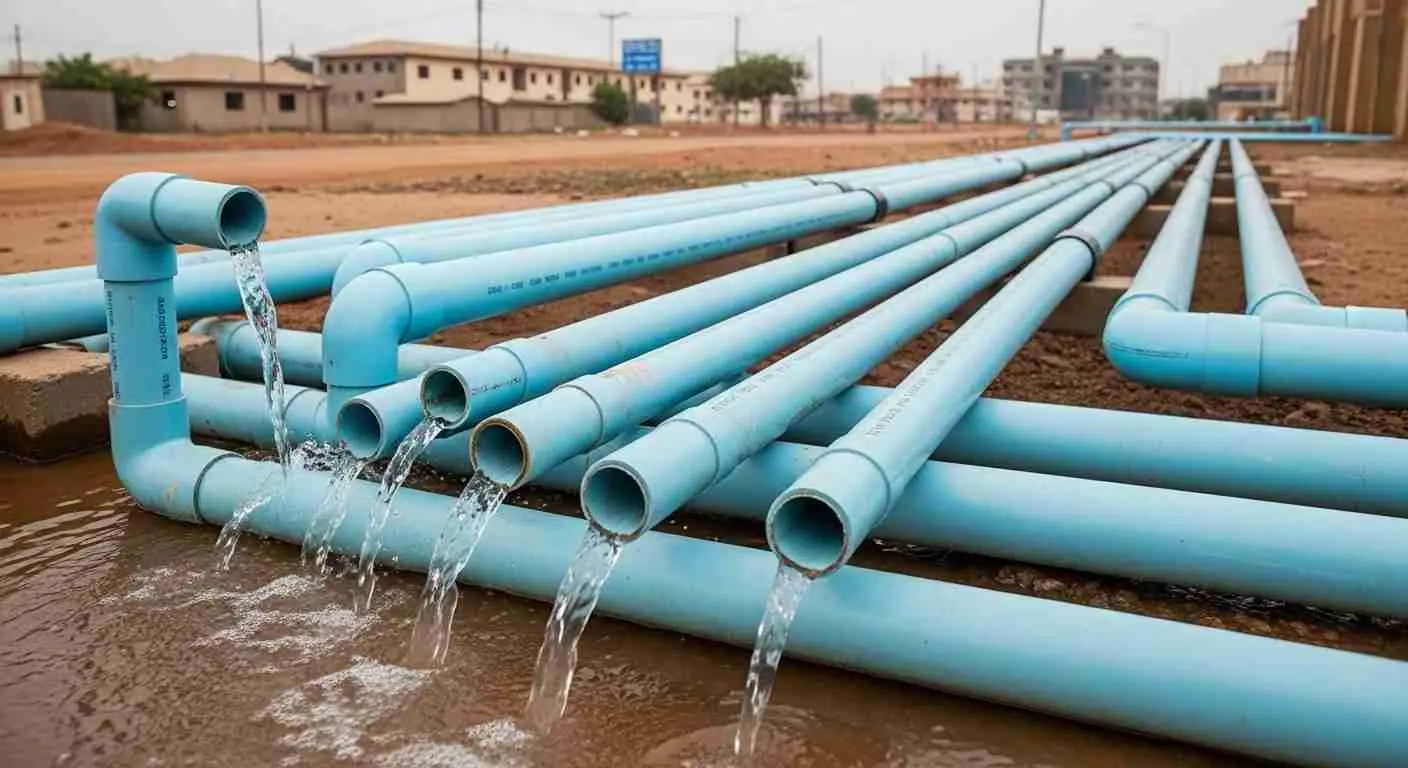
Nigeria is experiencing rapid urbanization and massive industrial growth. This expansion brings significant water supply challenges to the forefront. Reliable access to clean water is no longer just a basic human need. It is a critical requirement for economic survival and industrial continuity. Because of this, the demand for top water infrastructure companies Nigeria has never been higher.
Whether you are managing a large municipal project or running a manufacturing plant, you need a partner who understands the local terrain and global engineering standards. Poorly designed water systems lead to operational downtime, health hazards, and massive financial losses. DE-PRIME Integrated Services Limited is here to help you navigate these complex engineering needs with precision and expertise.
What Is Water Infrastructure?
Water infrastructure refers to the physical systems and structures used to manage water resources. It encompasses everything from the source to the tap, and finally to the drainage system. These systems are the backbone of public health and industrial productivity.
The major components of a complete water network include:
- Water distribution networks: The grid of pipes that delivers water to end users.
- Pipelines: The primary arteries transporting water over long distances.
- Pumping stations: Facilities that maintain the necessary pressure to move water through the system.
- Water treatment plants: Facilities that purify raw water to meet safety standards.
- Storage facilities: Tanks and reservoirs that hold water for peak demand periods.
In Nigeria, you can see these components in action across major cities. The Lagos State water schemes rely on massive treatment plants at Iju and Abeokuta. Meanwhile, Abuja municipal supplies depend on an extensive network of pipelines and pumping stations to serve the expanding capital. Understanding these components is the first step in planning a successful project.
Why Water Infrastructure Matters in Nigeria
The importance of robust water systems cannot be overstated in the Nigerian context. Several factors drive this critical need.
Population Growth and Urban Expansion Nigeria is one of the fastest-growing populations in the world. Cities are expanding outward at an unprecedented rate. This puts immense pressure on existing water networks. New infrastructure is required just to maintain current service levels.
Clean Water Access and Public Health According to the World Health Organization and UNICEF, millions of Nigerians still lack access to safely managed drinking water. Proper infrastructure reduces waterborne diseases. It directly improves public health outcomes and reduces the burden on the healthcare system.
Agriculture and Manufacturing Agriculture remains a massive part of the economy. Irrigation systems require reliable water infrastructure. Similarly, manufacturing companies need consistent water supplies for their production processes. Without industrial water infrastructure, factories face costly shutdowns.
Commercial Developments and Economic Growth Modern commercial real estate requires high-pressure, clean water systems. Property developers know that reliable water access increases property value. It also attracts high-quality tenants.
Environmental Sustainability Proper wastewater management prevents the pollution of local rivers and groundwater. Sustainable water infrastructure ensures that we do not deplete our natural resources faster than they can recharge. This protects the environment for future generations.
Services Provided by Water Infrastructure Companies Nigeria
A full-service engineering firm offers a wide range of capabilities. Here is a detailed look at the core services you should expect.
Water Supply System Design
Purpose: To create a blueprint for efficient water delivery. Process: Engineers conduct topographical surveys and hydraulic modeling. They use advanced CAD software to design pipe networks that minimize pressure loss. Applications: New residential estates, commercial complexes, and industrial parks. Benefits: Optimized water flow, reduced energy consumption for pumping, and accurate cost estimation before construction begins.
Pipeline Installation
Purpose: To physically lay the pipes that transport water. Process: This involves trenching, pipe laying, welding, and backfilling. For pipeline installation Nigeria projects, engineers must account for soil conditions and traffic loads. Applications: Cross-country transmission lines, urban distribution networks, and industrial plant piping. Benefits: Secure transport of water, minimized leak risks, and long-term structural integrity.
Water Treatment Plants
Purpose: To purify raw water from rivers, boreholes, or municipal sources. Process: As a dedicated water treatment company Nigeria, the process includes coagulation, flocculation, sedimentation, filtration, and disinfection. Advanced systems may include reverse osmosis. Applications: Municipal water supplies, beverage manufacturing, and pharmaceutical production. Benefits: Production of safe, clean water that meets regulatory standards and protects public health.
Industrial Water Systems
Purpose: To supply and manage water for specific manufacturing processes. Process: Engineers design cooling towers, boiler feed systems, and closed-loop recycling units. They tailor the industrial water infrastructure to the specific needs of the factory. Applications: Oil and gas facilities, food processing plants, and textile manufacturing. Benefits: Uninterrupted production, reduced water consumption through recycling, and compliance with environmental discharge limits.
Municipal Water Projects
Purpose: To provide large-scale water solutions for city populations. Process: This involves designing intake structures, massive treatment facilities, and extensive distribution grids. It requires close coordination with local government bodies. Applications: City council water schemes, state-level water boards, and federal water initiatives. Benefits: Improved public health, enhanced quality of life, and support for local economic development.
Wastewater Management
Purpose: To collect, treat, and safely dispose of or reuse effluent. Process: Engineers design sewer networks, pumping stations, and biological treatment plants. They ensure the treated water meets environmental standards before discharge. Applications: Urban sewage systems, industrial effluent treatment, and large residential estates. Benefits: Prevention of environmental pollution, compliance with environmental laws, and potential for water reuse.
Water Storage Solutions
Purpose: To store treated water and maintain system pressure. Process: This includes the fabrication and installation of ground-level reservoirs, overhead tanks, and elevated water towers. Applications: Commercial buildings, industrial facilities, and municipal distribution nodes. Benefits: Reliable water supply during power outages, stabilized network pressure, and emergency water reserves.
Maintenance and Rehabilitation
Purpose: To extend the lifespan of existing water assets. Process: Teams conduct regular inspections, pipe cleaning, leak detection, and structural repairs. They replace aging components before they fail. Applications: Aging municipal networks,老旧 industrial plants, and commercial building systems. Benefits: Prevention of catastrophic failures, reduced emergency repair costs, and sustained system efficiency.
How to Select Water Infrastructure Companies Nigeria
Choosing the right contractor is critical for project success. Here are the key factors you must evaluate.
Industry Experience
Look for a firm with a proven track record. Experience in the local terrain means they understand the unique challenges of Nigerian soil, climate, and supply chains.
Technical Expertise
The firm must have deep engineering knowledge. They should be capable of handling complex hydraulic designs and modern treatment technologies.
Regulatory Compliance
Ensure the company is registered with the Council for the Regulation of Engineering in Nigeria (COREN). Membership in the Nigerian Society of Engineers (NSE) is also a strong indicator of professionalism.
Project Portfolio
Review their past projects. A diverse portfolio showing success in both municipal and industrial sectors demonstrates versatility and capability.
Equipment and Technology
Modern projects require modern tools. Check if they use advanced surveying equipment, hydraulic modeling software, and modern construction machinery.
Skilled Workforce
The quality of a project depends on the people executing it. Ensure the company employs certified engineers, skilled welders, and experienced project managers.
Safety Standards
Construction involves inherent risks. A professional firm will have a robust Health, Safety, and Environment (HSE) policy to protect workers and the community.
Sustainability Practices
Look for a commitment to sustainable water infrastructure. They should prioritize energy-efficient designs and environmentally friendly construction methods.
After Project Support
A good contractor does not disappear after handover. They should offer training for your staff and provide ongoing maintenance support.
Cost Versus Value
Do not just choose the cheapest bid. Evaluate the total cost of ownership. A slightly higher initial investment in quality materials and design will save money over the system's lifespan.
| Factor | Professional Company | Inexperienced Contractor |
|---|---|---|
| Engineering Expertise | High and certified | Limited and unverified |
| Regulatory Compliance | Fully compliant | Inconsistent or lacking |
| Quality Control | Strict and documented | Variable and reactive |
| Safety Standards | Excellent and proactive | Moderate or poor |
| Long Term Value | High return on investment | Lower due to frequent repairs |
Benefits of Hiring a Professional Engineering Company
Partnering with a top-tier water engineering company delivers multiple advantages for your project.
Better Project Planning Professionals use data-driven models to predict water demand and system behavior. This prevents design flaws before construction even begins.
Regulatory Compliance Expert firms know the local building codes and environmental regulations. They ensure your project passes all necessary government inspections without delays.
Long Term Cost Savings While professional services might cost more upfront, they prevent expensive mistakes. Proper design reduces energy costs and minimizes future repair needs.
Improved Water Quality A well-designed treatment and distribution system prevents contamination. This ensures the water remains safe from the plant to the tap.
Reliable Infrastructure Professional engineering ensures the system can handle peak demands and unexpected stressors. This means fewer disruptions for your end users.
Lower Maintenance Costs High-quality materials and precise installation reduce the frequency of breakdowns. This lowers your ongoing operational expenses.
Faster Project Completion Experienced teams have optimized workflows. They anticipate bottlenecks and manage resources efficiently to deliver the project on time.
Sustainable Engineering Solutions Professionals integrate green technologies. This reduces the carbon footprint of your water systems and conserves vital resources.
Below is a summary of common services and their specific benefits.
| Service | Primary Application | Key Benefit |
|---|---|---|
| System Design | New commercial estates | Optimized flow and pressure |
| Pipeline Installation | Cross-country transport | Secure and leak-free transport |
| Treatment Plants | Municipal and industrial | Safe and compliant water output |
| Wastewater Management | Urban and factory effluent | Environmental protection |
| Storage Solutions | High-rise buildings | Stable pressure during outages |
Why DE-PRIME Integrated Services Limited Stands Out
DE-PRIME Integrated Services Limited is a premier engineering company Nigeria trusts for complex projects. We do not just build systems. We engineer long-term solutions.
Our integrated engineering expertise allows us to handle every phase of your project. From initial concept to final commissioning, we maintain strict quality control. Our core capabilities include comprehensive water infrastructure solutions and advanced plumbing systems.
We specialize in high-spec pipeline installation Nigeria projects, ensuring durability even in challenging terrains. As a leading water treatment company Nigeria, we design plants that deliver pristine water quality. Additionally, our dredging services are vital for projects in the Niger Delta and coastal regions, ensuring clear waterways and stable foundations.
We are deeply committed to quality and strict safety standards. Our experienced engineering team utilizes the latest technology to deliver sustainable project delivery. You can explore our detailed capabilities through our [Plumbing and Pipe Fitting], [Water Treatment Solutions], and [Dredging Services] pages. We also design modern [Bathroom Systems] for commercial and residential properties.
We believe in educating our clients and building lasting partnerships. Learn more about our corporate values on the [About DE-PRIME] page. When you are ready to start, reach out via our [Contact Page] for a comprehensive consultation.
Frequently Asked Questions
What do water infrastructure companies do? They design, construct, and maintain systems that manage water resources. This includes sourcing raw water, treating it to safe standards, distributing it through pipe networks, and managing the resulting wastewater. They provide the engineering backbone for public and private water needs.
How much does water infrastructure cost in Nigeria? Costs vary wildly based on project scope. A small commercial borehole and treatment system might cost a few million Naira. Conversely, a large municipal distribution network can run into billions. The final price depends on terrain, technology used, and system capacity.
How long does a water infrastructure project take? Timelines depend on the project scale. A standard industrial water treatment plant might take three to six months. Large municipal pipeline networks can take one to three years. Proper planning and experienced contractors help keep the project on schedule.
What industries need water infrastructure? Almost every industry relies on water. Manufacturing, oil and gas, agriculture, hospitality, healthcare, and commercial real estate all require specialized water systems. Even tech companies need reliable water for cooling their data centers.
What should I look for before hiring an engineering company? Verify their COREN registration and check their past project portfolio. Ensure they have a strong HSE policy and use modern engineering software. Most importantly, look for a firm that offers comprehensive after-project support and maintenance.
What is the difference between water treatment and water distribution? Water treatment is the process of purifying raw water to make it safe for use. It involves physical and chemical processes like filtration and chlorination. Water distribution is the physical transport of that treated water to the end user through a network of pipes and pumps.
Can water infrastructure improve operational efficiency? Absolutely. For industrial facilities, a reliable water system prevents production downtime. Efficient pumping designs reduce electricity consumption. Furthermore, wastewater recycling systems can drastically lower the cost of raw water procurement.
Why is preventive maintenance important? Water systems operate under constant pressure and are exposed to corrosive elements. Preventive maintenance identifies small issues before they become catastrophic failures. It extends the lifespan of the assets, ensures continuous water quality, and saves money on emergency repairs.
Conclusion
The demand for reliable water systems in Nigeria will only continue to grow. From supporting rapid urban expansion to driving industrial productivity, robust networks are essential for national development. Choosing the right partner is the most critical decision you will make for your project.
Always prioritize firms with proven technical expertise, strict safety standards, and a commitment to sustainable practices. Working with experienced professionals ensures your system is efficient, compliant, and built to last.
If you are planning a new project or need to upgrade an existing system, do not leave it to chance. Partner with experts who understand the local landscape and global standards. Contact DE-PRIME Integrated Services Limited today for expert consultation and project planning. Let us help you build the water infrastructure companies Nigeria needs for a sustainable future.