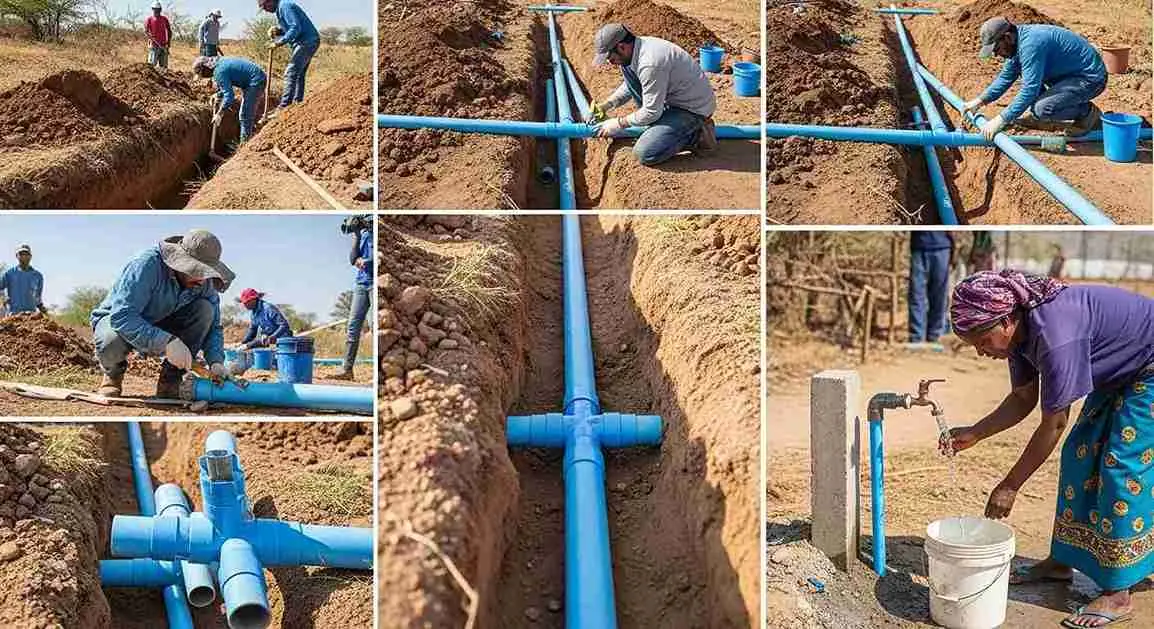
Millions of Nigerians depend on borehole water every day — for drinking, cooking, bathing, and running businesses. As municipal water supply remains unreliable across the country, boreholes have become the go-to alternative for homes, schools, hospitals, and industries.
But here is what many people overlook: borehole water is not automatically safe.
Raw borehole water often carries dissolved metals, bacteria, sediment, and other contaminants that are invisible to the naked eye. Without proper treatment, this water can damage your health, corrode your pipes, and ruin industrial equipment. That is why investing in the right borehole water treatment solutions is not optional — it is essential.
What Is Borehole Water Treatment?
Borehole water treatment is the process of removing harmful substances from groundwater to make it safe for its intended use — whether that is drinking, cooking, irrigation, or industrial processing.
Treatment systems work by filtering, neutralising, or eliminating contaminants through various physical, chemical, and biological processes. The right combination of treatment methods depends on what is actually in your water.
Key benefits of treating borehole water include:
- Protecting the health of your household or workforce
- Extending the lifespan of pipes, tanks, and appliances
- Improving water taste, colour, and smell
- Meeting regulatory standards for commercial and industrial use
- Reducing long-term maintenance costs
Common Borehole Water Problems in Nigeria
Before choosing a treatment system, it helps to understand the most frequent water quality issues found in Nigerian boreholes.
Iron and Manganese
High iron content is one of the most widespread problems. You will notice it as reddish-brown stains on sinks, toilets, and laundry. Manganese causes dark staining and can affect taste. Both metals are harmful in excess and need to be removed.
Hard Water
Hard water contains high levels of calcium and magnesium. It causes scale buildup in pipes, water heaters, and boilers, reducing efficiency and increasing energy costs. It also leaves soap scum on surfaces and skin.
Sediment and Turbidity
Sand, silt, and suspended particles make water cloudy and can clog pipes, damage pumps, and carry other contaminants. Turbid water is a sign that filtration is urgently needed.
Bacteria and Viruses
Groundwater can be contaminated by surface runoff, leaking septic tanks, or natural microbial activity. Drinking untreated borehole water contaminated with bacteria like E. coli or pathogens can cause serious illnesses including typhoid and cholera.
Bad Taste and Odour
Hydrogen sulphide produces a rotten egg smell. Chlorine compounds and organic matter can also cause unpleasant taste and odour, making water uncomfortable to drink even if it appears clean.
Salinity Issues
In coastal areas and certain inland regions of Nigeria, borehole water may contain elevated levels of dissolved salts. High salinity water is unsuitable for drinking, irrigation, and many industrial processes.
Why Water Quality Testing Matters
Before installing any treatment system, you must test your borehole water. This is a step that many property owners skip — and it often leads to money wasted on the wrong solution.
Water quality testing helps you:
- Identify exactly what contaminants are present so treatment is targeted, not guesswork
- Improve safety by knowing your water meets safe consumption standards
- Protect your plumbing and equipment from scale, corrosion, and blockages
- Select the most effective and cost-efficient treatment system for your specific water profile
DE Prime Integrated Services provides professional borehole water quality testing across Nigeria. Their engineers collect samples, conduct laboratory analysis, and recommend the right treatment approach based on your results — not assumptions.
Popular Borehole Water Treatment Solutions
Once you know what is in your water, you can select the right treatment technology. Here are the most effective systems used in Nigeria today.
1. Sediment Filters
How it works: Sediment filters use physical barriers — typically made from polypropylene, sand, or gravel — to trap and remove suspended particles like sand, silt, and rust from water.
Main benefits: Protects downstream equipment, improves water clarity, extends the life of other filters.
Typical applications: Residential homes, hotels, schools, and as a first stage in multi-stage treatment systems.
2. Activated Carbon Filters
How it works: Water passes through a bed of activated carbon, which adsorbs chlorine, organic compounds, and chemicals that cause bad taste and odour.
Main benefits: Dramatically improves taste and smell, removes chlorine and organic chemicals, often used as a polishing stage after other treatment.
Typical applications: Drinking water systems, restaurants, food processing facilities, and offices.
3. Water Softeners
How it works: Ion exchange resin replaces calcium and magnesium ions (hardness minerals) with sodium ions, softening the water and preventing scale formation.
Main benefits: Prevents pipe and boiler scaling, extends appliance lifespan, reduces soap usage, improves laundry results.
Typical applications: Hotels, hospitals, laundries, commercial kitchens, and any facility with high hot water usage.
4. Iron Removal Systems
How it works: Aeration or chemical oxidation converts dissolved iron and manganese into solid particles, which are then filtered out. Greensand filters and birm media are commonly used.
Main benefits: Eliminates staining, improves water clarity, prevents pipe corrosion and blockages.
Typical applications: Residential boreholes, farms, estates, and industrial facilities in iron-heavy regions.
5. Reverse Osmosis (RO) Systems
How it works: Water is pushed through a semi-permeable membrane under pressure, removing up to 99% of dissolved salts, heavy metals, bacteria, and other contaminants. The result is highly purified water.
Main benefits: Produces exceptionally clean water, removes a wide range of contaminants including salts and heavy metals, suitable for drinking and sensitive applications.
Typical applications: Hospitals, pharmaceutical companies, beverage manufacturers, packaged water producers, and households that need drinking-quality water. Reverse osmosis systems in Nigeria are increasingly popular in coastal and high-salinity areas.
DE Prime Integrated Services designs and installs both residential and industrial water treatment RO systems, with capacities ranging from small household units to large-scale commercial installations.
6. UV Sterilization Systems
How it works: Water passes through a chamber where ultraviolet light destroys the DNA of bacteria, viruses, and other microorganisms, rendering them unable to reproduce or cause harm.
Main benefits: Chemical-free disinfection, highly effective against bacteria and viruses, no change to water taste or chemistry.
Typical applications: Drinking water final treatment, hospitals, clinics, food production facilities, schools, and anywhere that biological contamination is a risk.
Choosing the Right Treatment System
No single solution fits every situation. The best borehole water treatment system for your property depends on several factors.
Water quality test results — The contaminants present in your water determine which technologies are required. Never assume; always test first.
Household or business usage — A family home has very different water quality and volume requirements compared to a hotel, factory, or hospital.
Budget — Treatment systems range from affordable single-stage filters to comprehensive multi-stage industrial plants. A water engineer can help you balance cost and performance.
Maintenance requirements — All systems need regular servicing. Consider filter replacement intervals, media regeneration, and availability of spare parts before committing to a system.
DE Prime Integrated Services takes a consultative approach — starting with a water quality assessment and then designing a customised treatment system that fits your usage, budget, and long-term goals.
Industries That Benefit from Borehole Water Treatment
Borehole water treatment is not just a domestic concern. Across Nigeria, many sectors depend on clean, reliable water for their daily operations.
- Homes and residential estates — Safe drinking water and protection of plumbing
- Hotels and hospitality — Guest safety, laundry quality, kitchen hygiene
- Schools and universities — Protecting children and students from waterborne disease
- Hospitals and clinics — Critical for patient safety, sterilisation, and medical processes
- Factories and manufacturing — Protecting machinery, maintaining product quality
- Farms and agribusinesses — Irrigation water quality affects crop yields and livestock health
- Government facilities — Compliance with public health standards
DE Prime Integrated Services has experience delivering borehole water treatment Nigeria-wide, from individual homes to large-scale industrial water treatment Nigeria projects.
Why Choose DE Prime Integrated Services?
When it comes to borehole water treatment, the quality of the engineering behind your system is just as important as the equipment itself. DE Prime Integrated Services stands out as one of Nigeria's trusted water engineering companies.
Here is what sets them apart:
- Water engineering expertise — A team of qualified engineers with deep knowledge of groundwater challenges specific to Nigeria's geology and climate
- Comprehensive water quality testing — Laboratory-grade analysis to identify your exact contamination profile
- Customised treatment systems — No off-the-shelf guesswork; every system is designed around your water test results and usage needs
- Commercial and industrial experience — Proven capability to handle projects of any scale, from a family home to a manufacturing plant
- Professional installation — Proper installation is critical for system performance; DE Prime's engineers ensure every system is set up correctly
- Ongoing maintenance support — Regular servicing contracts to keep your system performing at its best
- Nationwide service capability — Serving clients across Lagos, Abuja, Port Harcourt, Kano, and beyond
Visit deprimeintegrated.com to learn more or to request a water quality assessment for your property.
Frequently Asked Questions
Is borehole water safe to drink?
Not without testing and treatment. Raw borehole water often contains bacteria, dissolved metals, and other contaminants that pose serious health risks. Always test your water and install an appropriate treatment system before drinking it.
What is the best treatment method for borehole water?
The best method depends on your water test results. A combination approach — for example, sediment filtration + iron removal + reverse osmosis + UV sterilisation — typically provides the most comprehensive protection. A qualified water engineer can recommend the right system for your specific situation.
How much does borehole water treatment cost in Nigeria?
Costs vary widely depending on the system type, capacity, and complexity. Basic residential filtration systems can start from a few hundred thousand naira, while commercial and industrial systems cost significantly more. Contact DE Prime Integrated Services for a detailed quote based on your water test results and requirements.
How often should borehole water be tested?
It is recommended to test your borehole water at least once a year, and after any changes in water colour, taste, or smell. Testing after heavy rainfall is also advisable, as surface contamination can temporarily affect groundwater quality.
What removes iron from borehole water?
Iron removal filters using oxidation and filtration media (such as greensand or birm) are specifically designed to remove iron and manganese. In cases of very high iron concentration, a dedicated iron removal system installed before other treatment stages is the most effective solution.
Conclusion
Borehole water is a vital resource for millions of Nigerians — but it must be properly tested and treated before use. Whether you are a homeowner, school administrator, hotel manager, or factory operator, the right borehole water treatment solutions will protect your health, your equipment, and your investment.
The process starts with a proper water quality test, followed by a customised treatment system designed for your specific needs. From sediment filters and water softeners to reverse osmosis systems and UV sterilisation, the right combination makes all the difference.
DE Prime Integrated Services has the expertise, equipment, and nationwide reach to deliver professional borehole water treatment in Nigeria — from testing and design to installation and ongoing maintenance.
📞 Ready to get started? Contact DE Prime Integrated Services today at deprimeintegrated.com for a professional water quality assessment and a customised treatment solution for your home or business.