Nigeria's rapid urbanisation and infrastructure development depend heavily on reliable access to construction materials. Among these, sand is fundamental. This article explores the critical aspects of sand mining and dredging in Nigeria, focusing on current costs, operational factors, and how these impact construction projects. We aim to provide clear, actionable insights for stakeholders in the Nigerian building and construction industry.
What is Industrial Sand Mining
Industrial sand mining involves extracting sand from natural deposits for commercial use. This process is crucial for various sectors, including construction, glass manufacturing, and even water filtration. In Nigeria, the primary focus is on providing sand for building and land reclamation projects. The methods often involve mechanical excavation or hydraulic dredging, depending on the source and scale of operation.
Why is it Vital for Nigeria
Sand is a cornerstone of modern construction. It is a key component in concrete, mortar, and asphalt. For a developing nation like Nigeria, with ambitious infrastructure plans and a growing population, a steady supply of quality sand is indispensable. Projects ranging from roads and bridges to residential and commercial buildings all rely on this essential material. Furthermore, sand dredging plays a vital role in land reclamation, particularly in coastal cities like Lagos, creating new areas for development and mitigating erosion.
How Does Sand Dredging Work
Sand dredging is a specialised form of mining that extracts sand from underwater deposits, typically rivers, lakes, or the seabed. The process usually involves a dredge vessel equipped with powerful pumps and cutters. These machines loosen the sand from the bottom and then pump it as a slurry through pipelines to a designated discharge area. This area could be a stockpile on land or directly onto a reclamation site. The efficiency and environmental impact of dredging depend heavily on the technology used and adherence to regulatory guidelines.
Types of Sand Produced
Industrial sand mining and dredging yield different types of sand, each suited for specific applications. Understanding these types is crucial for any construction project.
| Feature | Sharp Sand | Soft Sand (Plaster Sand) | Filling Sand (Dredged Sand) |
| Texture | Coarse, angular grains | Fine, smooth grains | Varies, often mixed with silt/clay |
| Strength | High compressive strength | Low compressive strength | Moderate, suitable for base layers |
| Application | Concrete, block molding, floor screeding | Wall plastering, rendering | Land reclamation, foundation filling, road sub base |
| Price | Higher | Moderate | Lower |
Cost in Nigeria
The cost of sand and dredging services in Nigeria varies significantly based on location, quality, and supply logistics. Here is an estimated overview of prices in key Nigerian cities.
| Material | Location | Price per Ton (NGN) | Price per Cubic Meter (NGN) |
| Sharp Sand | Lagos | ₦7,500 - ₦9,000 | ₦12,000 - ₦15,000 |
| Abuja | ₦5,000 - 6,500 | ₦8,000 - ₦10,000 | |
| Port Harcourt | ₦4,000 - ₦5,500 | ₦6,500 - ₦8,500 | |
| Filling Sand | Lagos | ₦3,000 - ₦4,500 | ₦5,000 - ₦7,000 |
| Abuja | ₦2,500 - ₦3,500 | ₦4,000 - ₦5,500 | |
| Port Harcourt | ₦2,000 - ₦3,000 | ₦3,500 - ₦5,000 |
Note: Prices are estimates for 2024 and can fluctuate due to market dynamics, fuel costs, and transportation.
Dredging Costs Lagos
Dredging costs in Lagos are influenced by several factors, including the volume of material to be dredged, the type of dredge used, and the distance to the discharge site. A significant component of the cost is the dredging license fee Nigeria and associated permits. These fees can run into millions of Naira, depending on the scale and category of the operation. For specific project quotes, it is always best to consult with experienced Industrial Dredging Services providers like DE-Prime Integrated Services LTD.
Key Cost Factors in Nigeria
Several elements contribute to the overall sand mining equipment price and dredging costs in Nigeria:
Fuel Prices: Dredging equipment and transportation trucks consume significant amounts of fuel, making fuel costs a major determinant.
Equipment Maintenance: The wear and tear on heavy machinery necessitate regular maintenance and spare parts, adding to operational expenses.
Logistics and Transportation: The distance from the mining site to the project location significantly impacts the final cost, especially in a sprawling city like Lagos.
Permits and Licenses: Obtaining necessary permits from regulatory bodies like the National Inland Waterways Authority (NIWA) and the Ministry of Mines and Steel Development involves substantial fees. The dredging license fee Nigeria is a notable expense.
Environmental Impact Assessment (EIA): Conducting an EIA is a mandatory requirement for large scale sand mining and dredging projects, adding to the initial project costs.
Labor Costs: Skilled operators and support staff are essential for efficient operations.
Benefits of Dredged Sand
Dredged sand offers several advantages, particularly for large scale construction and land reclamation projects:
Abundant Supply: Dredging provides access to vast underwater sand reserves, ensuring a consistent supply for major projects.
Quality: Often, dredged sand is cleaner and has fewer impurities compared to some pit sands, making it ideal for concrete production.
Land Reclamation: It is the primary material used for creating new land, which is critical for urban expansion in coastal areas.
Navigational Improvement: Dredging also helps maintain and deepen waterways, improving navigation for marine transport.
Common Sourcing Mistakes
To avoid costly delays and quality issues, be aware of these common mistakes when sourcing sand:
Ignoring Quality Checks: Not verifying the sand's quality can lead to structural weaknesses in construction.
Bypassing Permits: Operating without proper permits can result in heavy fines, project stoppages, and legal issues. Always ensure your dredging permit requirements are met.
Underestimating Logistics: Failing to plan for transportation and accessibility can inflate costs and delay project timelines.
Choosing Unreliable Suppliers: Working with unverified sand supply contractors Lagos can lead to inconsistent supply, poor quality, and financial losses.
How to Choose a Provider in Nigeria
Selecting the right sand mining and dredging provider is paramount for project success. Consider these factors:
Experience and Reputation: Choose companies with a proven track record in industrial sand mining Lagos and dredging services.
Compliance: Ensure the provider has all necessary licenses and adheres to environmental regulations.
Equipment and Capacity: A provider with modern, well maintained equipment can ensure efficient and timely delivery.
Quality Assurance: Look for providers who can guarantee the quality and consistency of their sand products.
Safety Standards: Prioritise companies that uphold high safety standards for their operations and personnel.
FAQs
What is the current price of sharp sand?
The cost of sharp sand in Lagos 2024 ranges from ₦12,000 to ₦15,000 per cubic meter. In Port Harcourt, the cubic meter price of sand PH is typically between ₦6,500 and ₦8,500. These prices are estimates and can vary based on supplier, quantity, and delivery location.
Is dredged sand better than pit sand?
Dredged sand is often preferred for its cleanliness and consistency, making it excellent for concrete and land reclamation. Pit sand, while readily available, can sometimes contain more impurities like clay or organic matter, which might require additional processing for certain applications. The choice depends on the specific project requirements and desired quality.
How do you calculate dredging volume?
Dredging volume is typically calculated by determining the area to be dredged and the desired depth. For example, if you need to dredge an area of 100 square meters to a depth of 5 meters, the volume would be 500 cubic meters. This calculation helps estimate the cost to dredge a river in Nigeria or any other water body.
What permits are needed for sand mining?
Key permits include licenses from the National Inland Waterways Authority (NIWA) for dredging operations, and permits from the Ministry of Mines and Steel Development for general sand mining. An Environmental Impact Assessment (EIA) is also often required, especially for large scale projects. Adhering to these dredging permit requirements is crucial.
Do you deliver sand to Lekki sites?
Yes, DE-Prime Integrated Services LTD provides reliable sand supply contractors Lagos and delivers to various sites, including Lekki. Our logistics network ensures timely and efficient delivery of quality sand to meet your project needs.
Conclusion
Understanding the dynamics of sand mining Nigeria and dredging costs Lagos is essential for successful construction and development projects. From the varying prices of sharp sand to the complexities of obtaining a dredging license fee Nigeria, every detail impacts your budget and timeline. DE-Prime Integrated Services LTD stands as your trusted partner, offering expert Industrial Dredging Services and reliable sand supply. Contact us today for competitive pricing and professional solutions tailored to your project requirements. Ensure your next project is built on a solid foundation with DE-Prime.
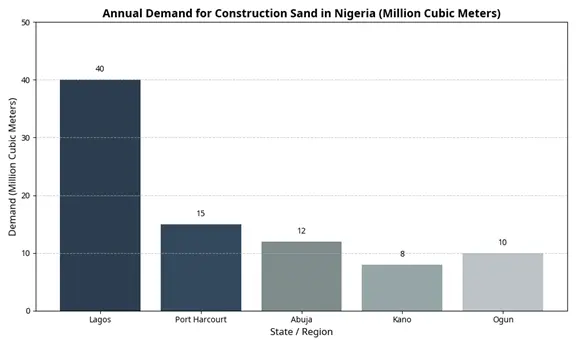
Annual Demand for Construction Sand in Nigeria